Physicists Careers
GENERAL SKILLS
Research and experimentation
Explore the fundamental behaviors of matter and energy. Carry out experiments often using sophisticated equipment.
Theoretical modeling and data analysis
Develop mathematical equations and models to explain physical phenomena or observations.
Teaching and Education
Teach physics at a college or university,
Instrument and Equipment Maintenance
Calibrate laboratory equipment, manage the instruments, and ensure they are in working condition.
Consulting
Give advice to outside companies or organizations related to aspects in the physical world.
Additional Information
Average Salary: $126K
Job Market: Approximately 21,100 physicists in the US.
Average Job Market Growth Per Decade: 4.7%
Average Education Level: Ph.D.
Astrophysicist
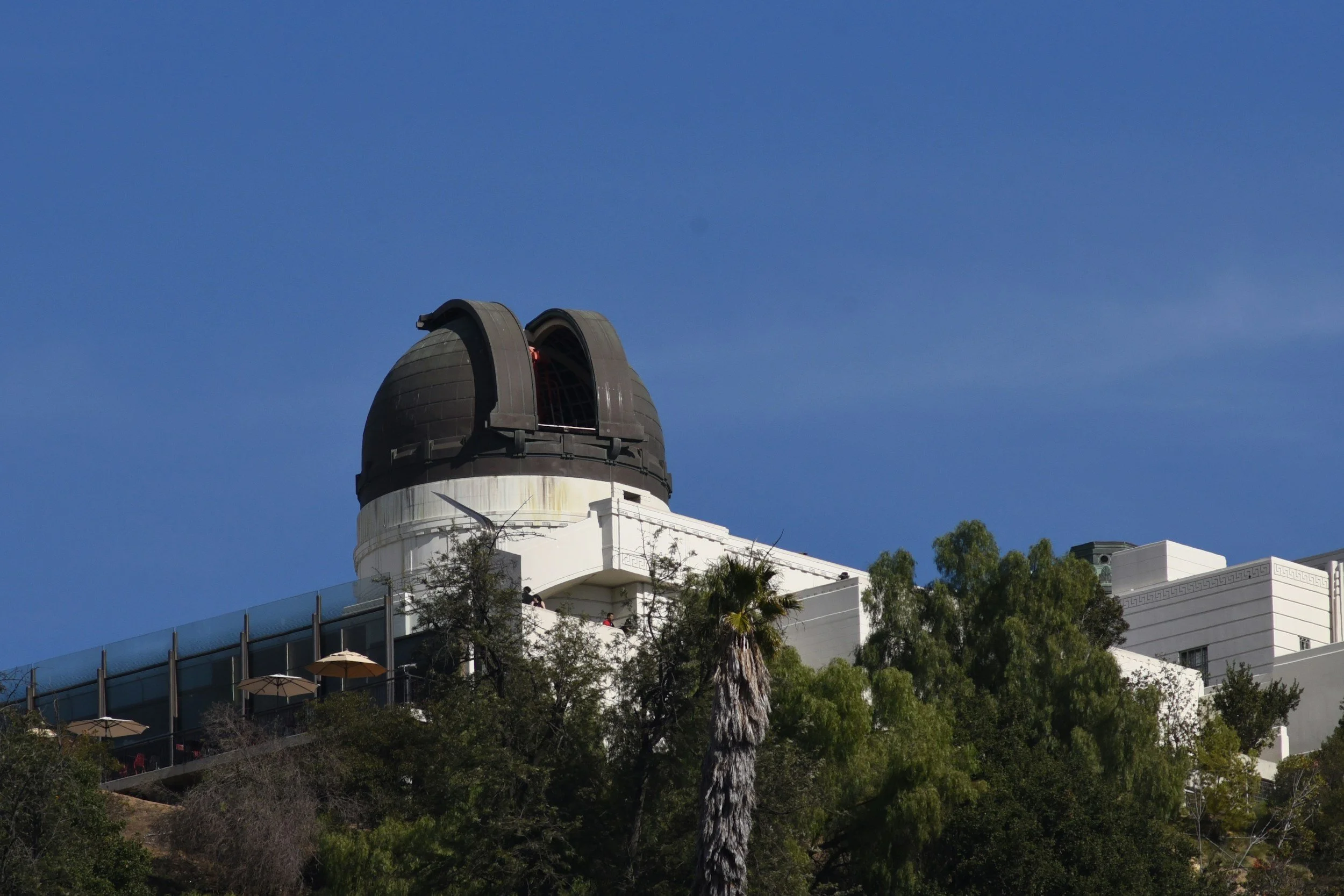
Astrophysicists typically utilize physics and math to analyze celestial objects and systems. Research is a primary and essential component to this field and job.
-
A master’s degree is the minimum requirement for being an astrophysicist, and a doctoral degree is required for many employers. A JEST, GATE, or NET certification is required.
-
8:00 am: Ensure previous experiments and code are running on the computer
8:30 am: Plan a schedule for experiments, meetings, and lab writing, and go through emails
9:00 am: Read scientific journals that relate to the topic at hand, and collect information
10:00 am: Attend seminars by other researchers and write notes that pertain to one’s research and topic.
12:00 am: Have lunch with other researchers, discussing about lab research or findings
1:00 pm: Utilize data analysis and coding skills to refute or support conclusions
3:00 pm: Have a seminar on current progress of the research, methods, and the research paper and submit findings to apply for grants
Astrophysics Lab Equipment & Techniques
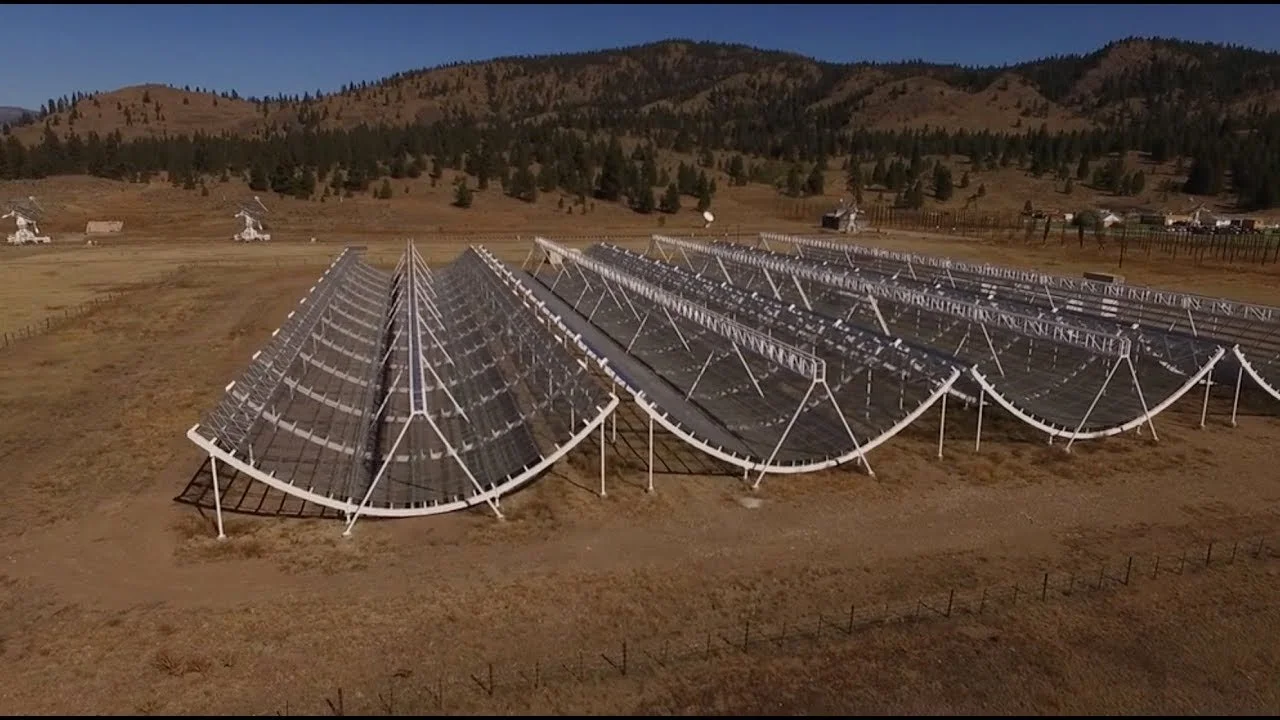
CHIME (Canadian Hydrogen Intensity Mapping Experiment)
Radio Telescope with no moving parts that can map large fields.
It can make a 3D dimensional model of an area using hydrogen density, and it can also use this data to measure expansion history of the universe.
Can measure dark energy, a mysterious and unknown phenomenon that scientists use as an explanation for the mysterious increase in expansion rate of the universe.
Utilizes fast radio bursts, and scientists track this for weeks and even up to years at at time in order to collect and analyze data.
Hydrogen Epoch of Reionization Array (HERA)
Another radio telescope that observes large areas of space.
Extremely massive, with a 14m diameter and having a hexagonal grid that is 300m wide.
Analyzes radio waves (low-frequency waves) to map neutral hydrogen during reionization.
Group of ~ 50 scientists maintain the satellite and organize data, making sure everything is in working order.
Laser Interferometer Gravitational-wave Observatory (LIGO)
World’s largest gravitational wave observator
Measures great changes in gravity and ripples in spacetime from great universal events like black holes colliding.
Since it only measures gravitational phenomenon, it is shielded from any EM waves (electromagnetic waves).
Interestingly, its shape is not a default dish-looking apparatus as it does not need to detect light.
Scientists obtain data for understanding violent processes in the universe, but the information can also be used to help with other areas like particle and nuclear physics as on earth, we obviously cannot collide two black holes into each other.
Magellan Telescopes, the Neutron Star Composition Explorer (NICER)
This experiment and apparatus involve analyzing thermal emissions and rotational spectroscopy to model interior structure of neutron stars.
Astrophysicists map this data because it is important in understanding how particle accelerators work. Neutron stars essentially have some of the strongest particle accelerators in the universe.
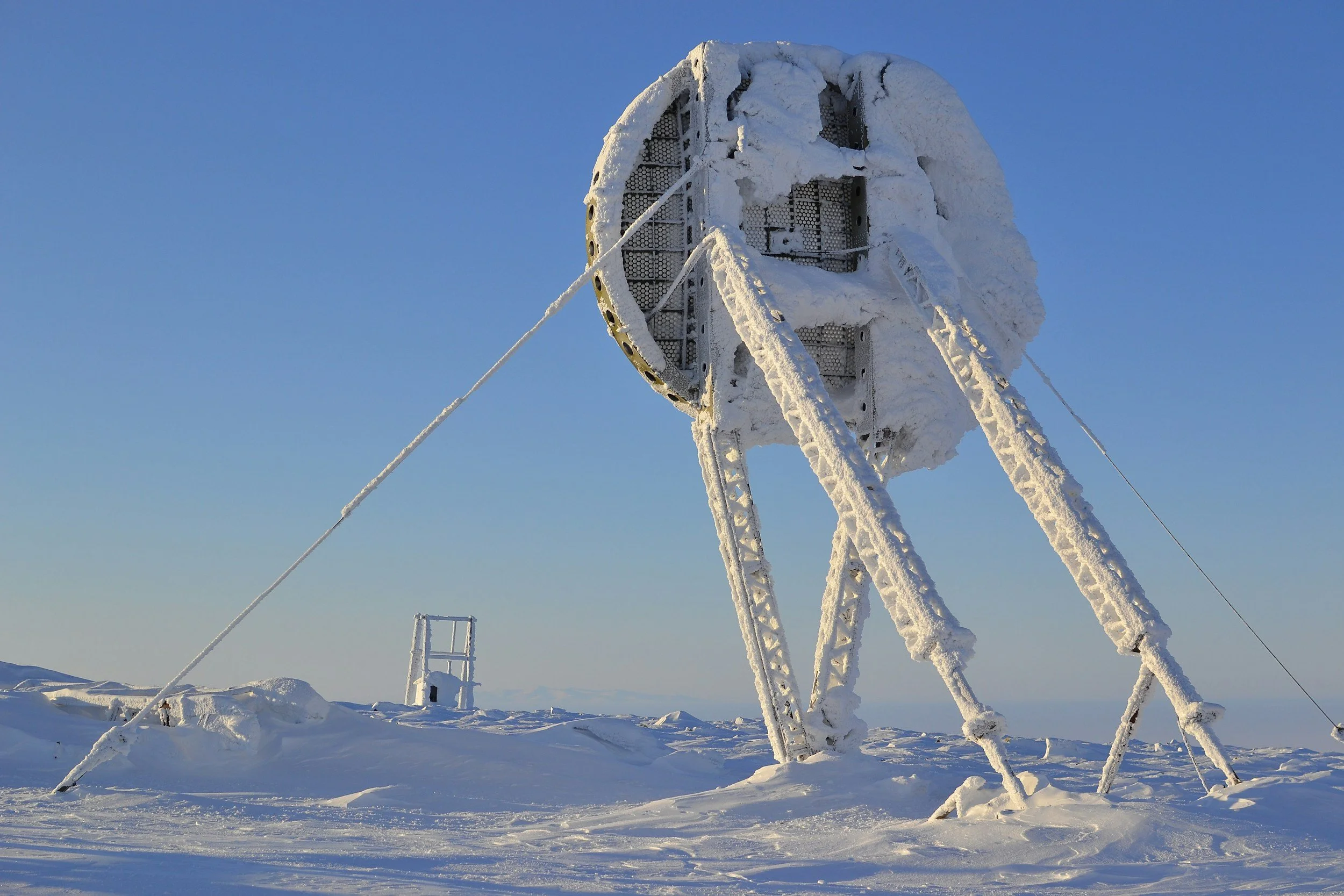
South Pole Telescope (SPT)
The South Pole Telescope is a large 10m diameter telescope with an extremely strong cosmic microwave background camera that can detect cosmic waves which can give insight into the beginnings of the universe.
This is because it is theorized that cosmic radiation filled the universe once the big bang happened, and its analysis can determine the origins of this event.
Nuclear Physicist
Nuclear Physicists study and utilize properties of the atom. These scientists focus on radioactivity, fission, and fusion, and apply these interactions and concepts to advance energy, medicine, or materials.
-
The minimum qualification is a bachelor’s degree in a field related to nuclear physics. Many employers will also require one to have experience, most commonly through an internship during an undergraduate career.
-
8:00 am: Check email and create a schedule. Respond to messages and review progress for code and data analysis, ensuring that computing devices are functional and running
9:00 am: Video conference with others to discuss findings and potential lab techniques to collect data
11:00 am: Have lunch with colleagues and relax.
12:30 am: Attend a physics lecture for learning theory and labs
2:00 pm: Carry out experiments and analyze behavior of nuclear materials
4:00 pm: Write a report on experiments and read research journals to help bolster claims
Nuclear Physics Lab Equipment & Techniques
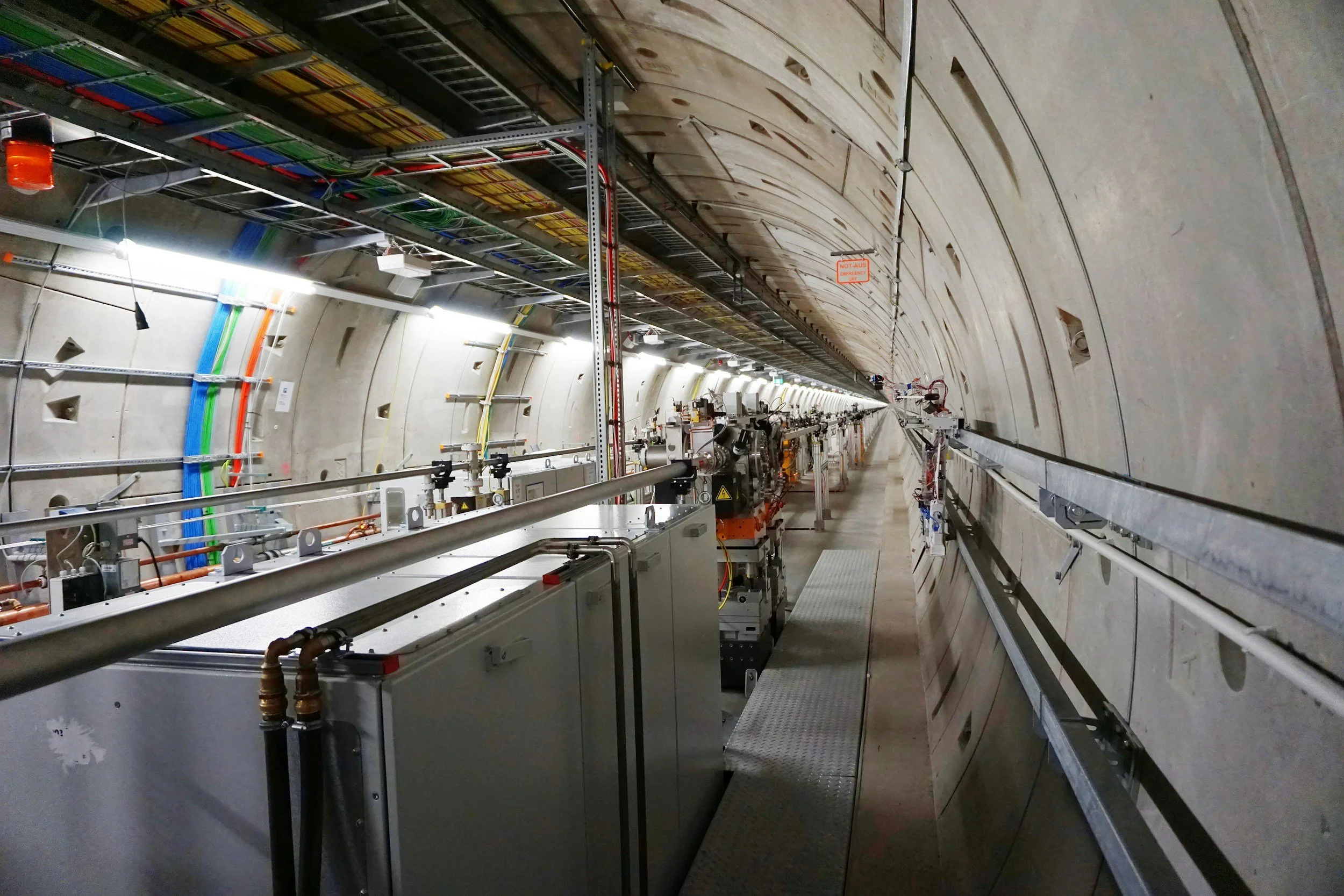
Electron-Ion Collider
Currently being built, but it is a particle accelerator that will analyze how some of the fundamental building blocks of the universe (quarks and gluons) interact and create protons.
Gran Sasso National Laboratory small Luna accelerator
Analyzes the formation of nuclei with energies close to stars
The primary objectives of scientists is to figure out how exactly heavy nuclei form, and they analyze and understand data.
Spes Project
Scientists have been studying radionuclides and isotopes for medical purposes, and scientists formulate procedures and theories in order to help create new drugs and treatments for certain diseases.
Quantum Physicist
Quantum Physicists study the atomic and subatomic levels, exploring and utilizing quantum phenomena like superposition to create technologies such as quantum computing and encryption.
Quantum Physicist Lab Equipment & Techniques
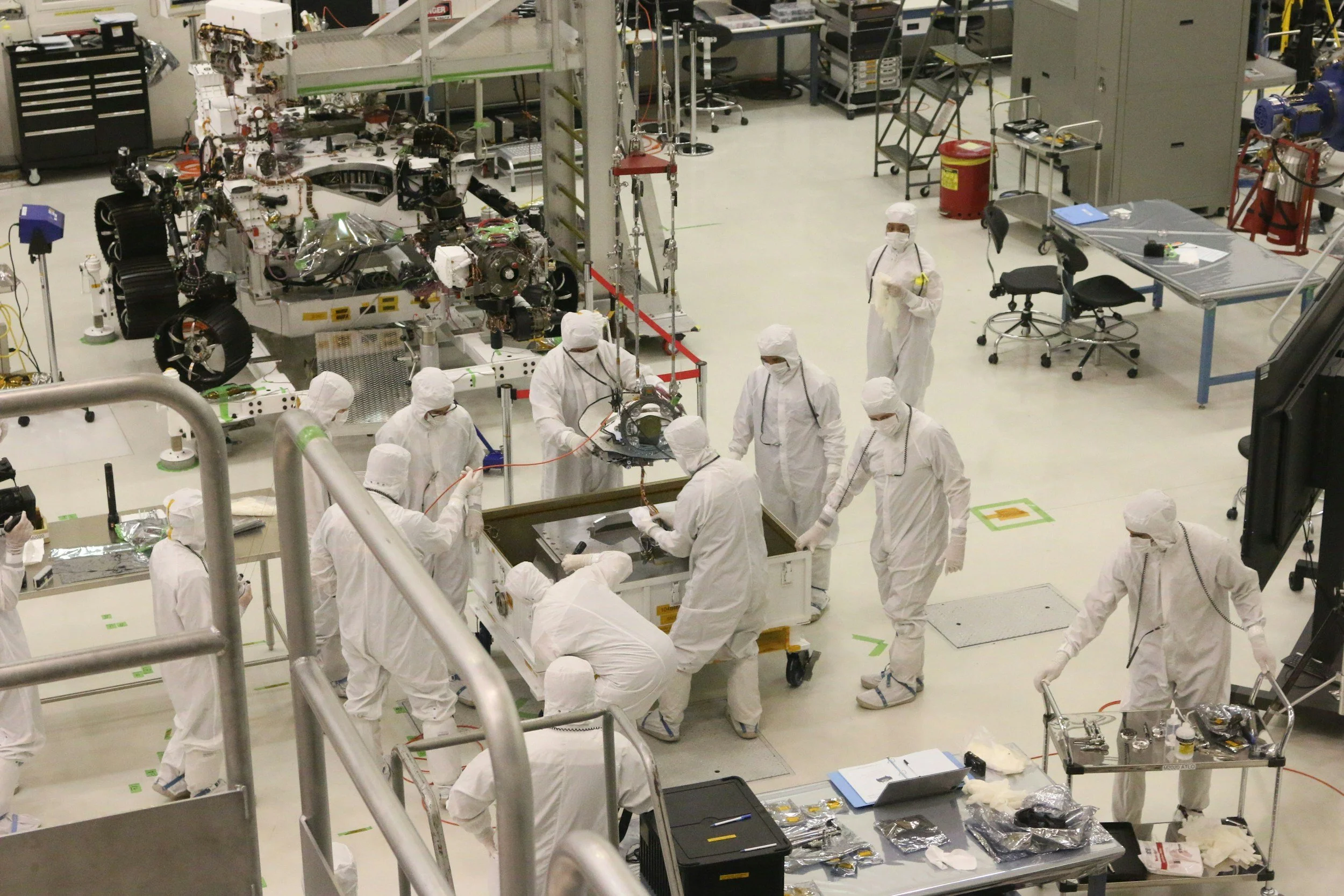
Clean room
In the room, create the single-atom-length materials.
There is zero dust in the clean room (hence the name), and the absence of dust ensures that these microscopic creations are not altered by random particles in the air.
Confocal microscope
This is where the materials are actually taken out, and the scientist will then use microscopes and light-emitting machines to see the properties of materials.
Imaging of the light being absorbed by the material is seen.
Map analysis of light absorption and proton excitation is seen.
Application to quantum communication
Researchers will find ways to use the excited proton and convert its superposition state to a normal polarized stated.
Has important implications to the real world as encryption can be created from this.